
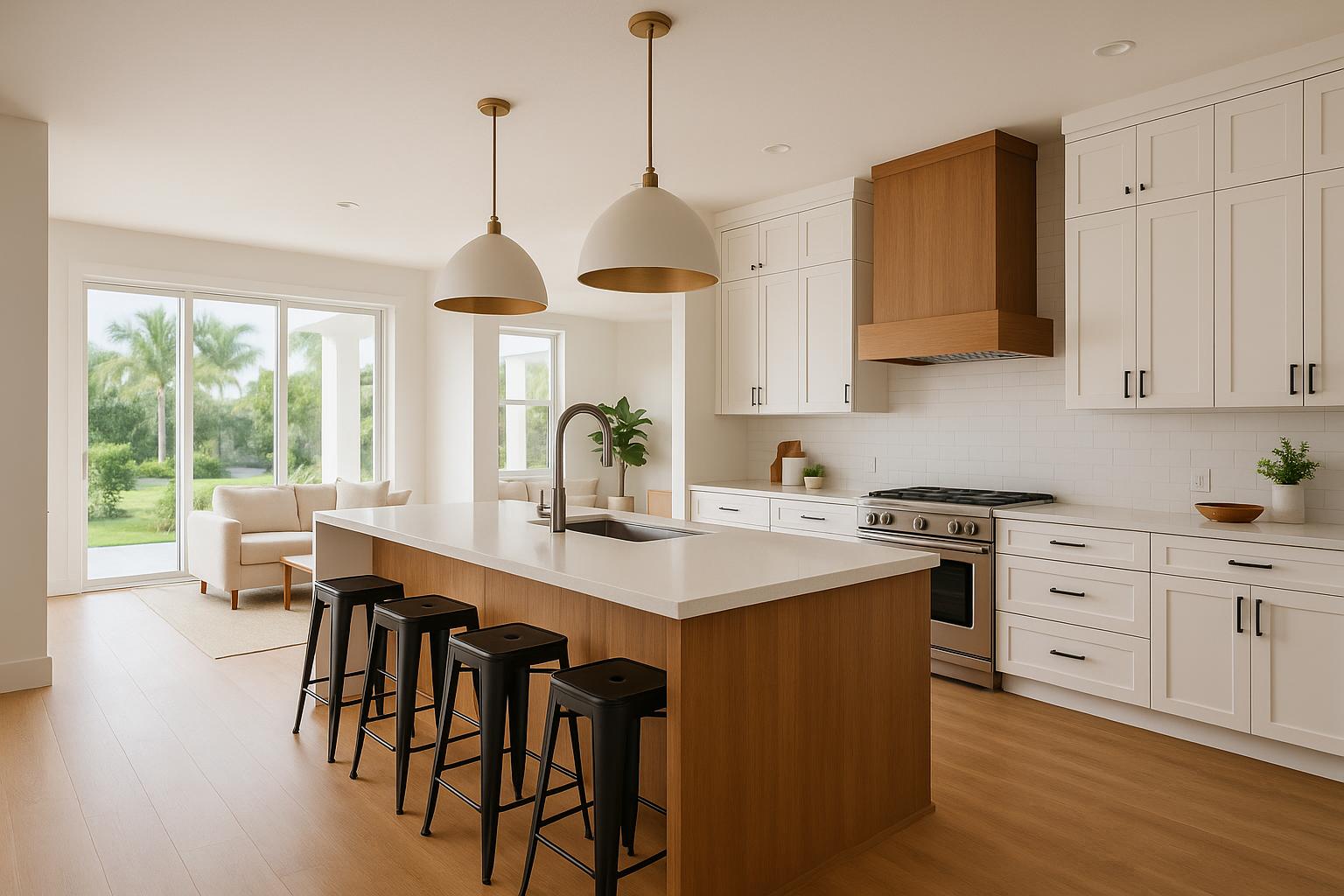
The Great Kitchen Layout Debate
If you're planning a kitchen remodel in Boca Raton, one of the biggest decisions you'll face has nothing to do with countertops, cabinets, or appliances. It's about the walls themselves — specifically, whether to keep them or tear them down.
Open concept kitchens have dominated home design trends for over a decade. But closed or semi-closed kitchens are making a quiet comeback, and for good reason. The right layout depends on how you actually live in your home, not what looks best on a design show.
Let's walk through the real pros and cons of each layout so you can make a confident decision before your remodel begins.
What Is an Open Concept Kitchen?
An open concept kitchen removes the walls between the kitchen and adjacent living spaces — usually the dining room, family room, or both. The result is one large, connected area where cooking, eating, and socializing all happen in the same shared space.
This layout is especially popular in South Florida homes where natural light and a sense of spaciousness are highly valued. Many homeowners in Boca Raton who remodel older homes from the 1970s through 1990s choose to open up their kitchens to modernize the floor plan.
Pros of an Open Concept Kitchen
- Better flow for entertaining. If you love hosting, an open layout lets you cook while staying part of the conversation. No more being stuck behind a wall while your guests are in the next room.
- More natural light. Removing walls allows light to travel through the space, which can make the entire first floor feel brighter and more inviting.
- Easier to watch kids or pets. Parents often prefer open layouts because they can keep an eye on children in the living area while preparing meals.
- Perception of more space. Even without adding square footage, an open floor plan makes a home feel significantly larger. This is a real advantage in homes where the kitchen was originally small or boxed in.
- Higher resale appeal. Open concept layouts remain a strong selling point in the Boca Raton real estate market, especially for buyers looking for updated, move-in-ready homes.
Cons of an Open Concept Kitchen
- Cooking smells and noise travel. There's no wall to contain the sound of a blender at 7 a.m. or the smell of last night's fish dinner. If your household is sensitive to noise or odors, this matters.
- Less wall space for storage. Removing walls means losing potential cabinet or shelving space. You'll need to plan your storage carefully to compensate.
- Clutter is always visible. A stack of dishes or a messy countertop is on full display when the kitchen is open to the rest of the home. If you prefer a tidy-looking living space, this can be a constant source of stress.
- Structural considerations. Some walls are load-bearing, which means removing them requires engineering work, permits, and additional cost. This doesn't mean it can't be done — it just means it needs to be done right.
What About a Closed Kitchen?
A closed kitchen is a traditional layout where the kitchen is its own separate room with defined walls and doorways. While it might sound outdated, many homeowners are rediscovering the benefits of a more contained cooking space.
Pros of a Closed Kitchen
- Contained mess and odors. Everything stays in the kitchen — the smoke, the smell, the pile of pots. You can close the door and deal with it later.
- More storage and counter space. Four walls give you significantly more room for upper cabinets, shelving, and counter-mounted appliances.
- Quieter living areas. If someone is cooking while another person is watching TV or working from home, a closed kitchen keeps the noise separate.
- Defined spaces feel intentional. Some homeowners simply prefer rooms that have a clear purpose. A closed kitchen can feel cozy, efficient, and well-organized.
Cons of a Closed Kitchen
- Can feel isolated. The cook is separated from the rest of the household, which can make meal prep feel like a solo task rather than a shared experience.
- Less natural light. Without borrowed light from adjacent rooms, a closed kitchen may feel darker, especially in older homes with smaller windows.
- May feel dated to some buyers. While preferences are shifting, many homebuyers still expect an open or semi-open layout. A fully closed kitchen could be a drawback at resale depending on your market.
The Middle Ground: Semi-Open Layouts
You don't have to choose one extreme or the other. Many of the kitchen remodels we do in Boca Raton land somewhere in between — and that's often the smartest solution.
Here are a few ways to get the best of both worlds:
- A large pass-through or half wall. This opens up the sightline between the kitchen and living area without removing the entire wall. It also gives you a natural spot for a breakfast bar.
- A sliding barn door or pocket door. This lets you close off the kitchen when you want privacy or containment, and open it up when you're entertaining.
- An island as a divider. In a partially open layout, a kitchen island can serve as a visual boundary between the cooking zone and the living space while keeping everything connected.
These hybrid approaches are especially practical in South Florida homes where the original floor plan may not support a full wall removal without significant structural work.
Questions to Ask Before You Decide
Before committing to a layout, take an honest look at how your household uses the kitchen on a daily basis. Here are a few questions worth thinking through:
- Do you cook frequently, and does the mess bother you when guests can see it?
- Do you entertain often, or is your kitchen mostly used by your immediate family?
- Is anyone in the household working from home in an adjacent room?
- Does your current kitchen feel too dark or too cramped?
- Are you planning to sell in the next few years, or is this your long-term home?
Your answers will point you toward the layout that actually fits your life — not just the one that looks good in a magazine.
How a Remodeling Contractor Can Help
A good contractor won't just build what you ask for — they'll help you think through the decision before any work begins. At Blackbird Construction, we walk homeowners through layout options during the planning phase so there are no surprises once demolition starts.
If a wall is load-bearing, we'll bring in the right engineer. If a full open concept doesn't make sense for your home, we'll suggest alternatives that give you the feel you want without unnecessary cost or compromise.
Whether you're remodeling a 1980s ranch in Boca Raton or updating a newer home in Delray Beach, the layout decision sets the tone for everything else — your cabinet design, your lighting plan, your workflow in the kitchen. Getting it right from the start saves time, money, and frustration down the road.
The Bottom Line
There's no universally correct answer to the open vs. closed kitchen debate. The best layout is the one that matches how you cook, how you live, and how your home is built. Take the time to think it through, talk to a contractor who will give you honest advice, and make the choice that works for your household — not just for the trend of the moment.